Picksights

Printers · Comparison

Epson EcoTank ET-4800 vs ET-2803

This isn't a better-versus-worse comparison — both use the same tank-ink system and roughly the same running cost. The real difference is three specific features on the ET-4800 — automatic document feeder, fax and Ethernet — for about $40 more than the ET-2803.

Last updated 2026-07-29.

Picksights may earn a commission if you buy through links on this page. This never affects which products we rank higher — our Picksights Score is calculated from published specs before any affiliate relationship is considered. See our ranking methodology below.

As an Amazon Associate, Picksights earns from qualifying purchases.

Quick comparison

Ranked by Picksights Score. Prices are approximate and change frequently.
ProductPicksights ScoreFromBest for
#1 · Epson Epson EcoTank ET-48008.7/10$219.99Best for a home office
#2 · Epson Epson EcoTank ET-28038.4/10$179Best for most homes

Swipe the table sideways to see every column.

Top pick

Epson Epson EcoTank ET-4800

Epson

Number 1: Epson EcoTank ET-4800

PS8.7/10

Best for a home office

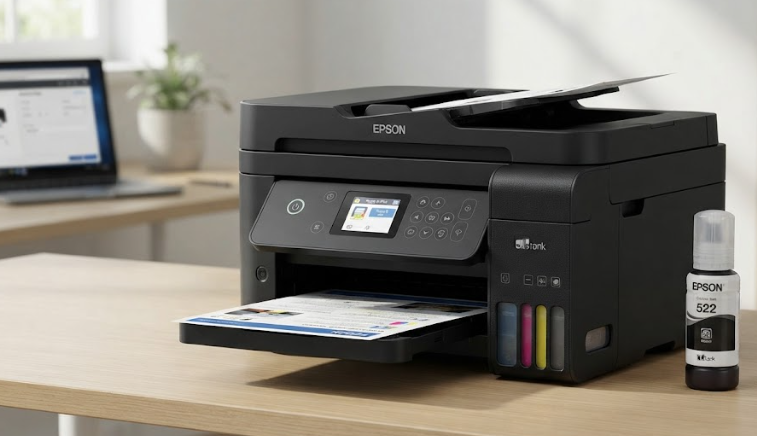
The one to buy if the printer has a job rather than a corner. The document feeder alone changes what you can do with it — scanning a stack instead of a page at a time — and it is the only machine here with Ethernet. It also costs the most up front, which is exactly the number you should be ignoring: on Consumer Reports' own modelling, a $128 cartridge printer overtakes this on total cost inside the first year and keeps going.

Pros

  • Bottled ink costs a fraction of cartridge ink per page — the whole argument for buying a tank printer
  • Automatic document feeder and Ethernet, which the cheaper tanks here leave out
  • Fax and copy included, so it replaces an office multifunction outright

Cons

  • The highest purchase price of the three, which is the number most shoppers compare
  • Photo output is competent rather than a reason to buy it
  • Tank printers need occasional use or the print head can clog

From $219.99Approximate — prices change

See current price(opens in a new tab)

Sources: Consumer Reports (laboratory testing and cost-of-ownership modelling) (2026-06-24) · TechRadar (standardised test across 200+ printers) (2026-07)Last checked by Picksights 2026-07-29

Epson Epson EcoTank ET-2803

Epson

Number 2: Epson EcoTank ET-2803

PS8.4/10

Best for most homes

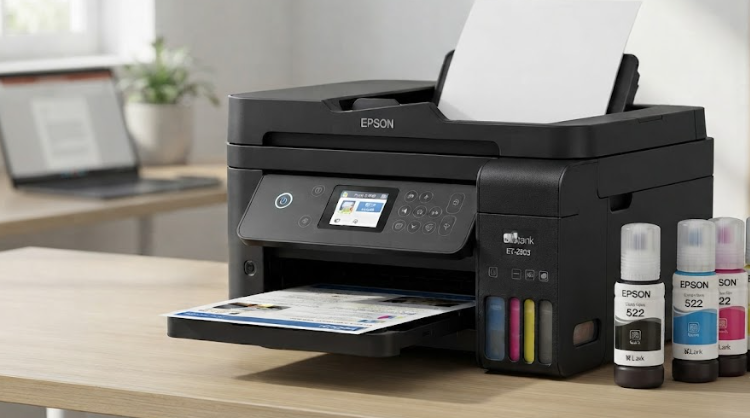
The default recommendation for a house rather than an office. It does the three things households actually need — print, scan, copy — and it does them with the ink economics that make tank printers worth the higher sticker. You give up the document feeder, which matters only if you regularly scan stacks of paper. If you do, spend the extra $40; if you do not, this is the one.

Pros

  • Around two years of ink in the box, so the first refill is a long way off
  • The cheapest genuine tank printer here, and the running-cost advantage is identical to the pricier model
  • Simple enough that it is the sensible default for a household

Cons

  • No document feeder — scanning multiple pages means feeding them one at a time
  • No fax or Ethernet
  • Colour output is adequate rather than good

From $179Approximate — prices change

See current price(opens in a new tab)

Sources: RTINGS printer testing (2026) · TechRadar (standardised test across 200+ printers) (2026-07)Last checked by Picksights 2026-07-29

The real question: do you need ADF, fax and Ethernet?

The ET-4800 includes an automatic document feeder, fax and Ethernet — the complete package for a home office, with scanner, copier and fax. If you regularly scan stacks of paper or need fax for some paperwork, those three features justify the extra cost on their own.

The ET-2803 sticks to print/scan/copy over Wi-Fi, with no ADF, fax or Ethernet, and ships with roughly two years of ink from the factory per the manufacturer. For an ordinary household without office-style needs, that extra ET-4800 capacity is money you won't get back in actual use.

How we rank

Picksights Score is a weighted average of 4 criteria, the same as in the full printer ranking:

  • Running cost — 35%
  • Print quality — 25%
  • Price — 25%
  • Features — 15%